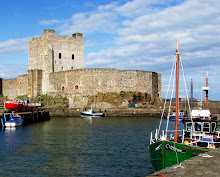
Showing posts with label E-10. Show all posts

Thursday, April 24, 2008

To post or not to post . . . that is the question


There is no political content today. At least, that is the intention as I start to write this epistle.

During the past few years our neighbor’s sons have been members of St. Thomas Episcopal School's famous pipe band. J and I attended several past performances of the school’s Scottish Festival. My Pentax K10D arrived back from repair just in time for the spectacle last Friday. Over the years I have struggled with mixed success to capture good images of the performance. I have also struggled with the whole concept of proper use of photographs of somebody else’s children. This is especially true in today’s world where it is common to post pictures on the Web. Few Web systems offer any promise that postings can ever be completely deleted. Most web pages can be indexed, cached and stored forever by Google, Yahoo or one of the other search engines. With a little effort any user can download and store images and text displayed on their computer. It is both humbling and frightening. It is humbling because these words may already have been indexed by the time that you read them. It is frightening because people who are embarrassed or hurt by the content of a web page cannot easily have that problem erased or corrected. Posting on the web might almost be the modern equivalent of carving in stone.

And so my images of the Scottish Festival are destined to remain in the dark. The images from the Pentax were much higher quality than those from the old Olympus. That was expected. They taught be a little more about what works in that mixture of dark backgrounds and intense spotlights. They also suggest a compromise – an “artistic” shot that tries to capture the color, rhythm, beauty and excitement of the evening while cloaking the individual performers in mystery. I think that will be the objective for next year.

Friday, April 11, 2008

Gestures can make a difference

The Olympic Games are supposed to be a symbol of international goodwill, sportsmanship and physical rivalry. Our televisions regularly show stories of athletes who have honed their talents and won a place on the national team. These reports suggest that the “spirit of the games” is alive and well. But politics also overshadows the Olympics. The games provide a perfect venue for governments and individuals to make grand demonstrations. In 1936, Nazi Germany used the games to highlight its national and racial ideologies. During the Munich games, terrorists massacred Israeli athletes. The US government led a boycott of the Moscow Olympics to protest actions by the host nation. In 1968, two American athletes received their medals shoeless, but wearing black socks, to represent black poverty. When the national anthem was played they gave a black-power salute. The 2008 Olympic Games may well provide an opportunity for demonstrations that are as far reaching as any of these.

Not since 1936 has a country invested so much national prestige in hosting the games. Not since 1980 have the policies of a host nation caused so much controversy. The latest events in Tibet appear to be a straw that has broken the camel’s back. Already some are calling for a boycott of the games – especially the symbolic “Opening Ceremony”. These calls require a response at a personal and a national level. A spokesman for one of the presidential candidates suggested that the USA is so dependent on China to fund our deficit that we cannot afford to upset them. In that camp economic concerns trump moral considerations. For them, we are already an economic vassal of China. Another presidential candidate has declared for a boycott of the opening ceremony. The third has offered no guidance.

As a friend remarked in Sunday school last week, “We are not called to change the world but we are responsible for our own actions”. So, I shall not be participating in the 2008 Olympics. I shall not watch the television coverage and I shall not buy products from companies that support the games. I know my decisions will have absolutely no affect on China’s human rights policies or how the games evolve. But I remain a true optimist. I remember how Horiatio and his two companions held the bridge and saved Rome, how the 300 Spartans helped defeat the Persian invaders and how the defenders of the Alamo bought time for Texas. Maybe, just maybe, my little gesture will encourage others and like these photographs of two different sides of the Texas story, a gesture doomed to defeat can lead to change. Maybe also, that spokesman’s comment will awaken all the presidential candidates to our nation’s real weakness - a weakness caused because we are so indebted to foreigners that we have no freedom to act as we choose.

Monday, April 7, 2008

Caracas - and 4megapixels

I spent last week in Caracas. A couple of things surprised me. The exchange rate between the US dollar and the Venezuelan Bolívar is fixed by the Venezuelan government. It is about 2.15 Bolivars Fuerte (BF) to the $US. There is also an unofficial rate fixed by the laws of supply and demand. Recently the free market valued the US Dollar around 4.2 BF. Last week, the US Dollar had devalued to 3.8 BF. I was told that the reason for the drop was a demand for bolivars. The Venezuelan tax year ended on March 31 and so people needed bolivars to pay their taxes. Businesses sold US dollars for bolivars. Lots of people selling US Dollars decreased the value of the dollar. I could not help wondering if our government observed this example of free market action. Maybe the fact that the US dollar even lost value against the Bolívar made an impression on some in the White House. One day, our suppliers are going to price and sell crude oil for Euros instead of US Dollars. When that time comes foreigners will not need so many dollars. I do not like to think about how supply and demand will price our currency when there is no artificial demand for it.

My other surprise related to my expectations of crime and safety. My hotel was close to Parc Del Este. This public park is home to Venezuelan birds, trees, flowers and small animals. On Thursday morning I was awake before 6 am so I decided to wander through the park with the old Olympus camera (the Pentax is off for repair!) I left the hotel under a grey sky after dawn and walked to the park. I admit I took some safety precautions. I left my money, credit cards and valuables in the room safe. All I carried were some business cards for identification and about $40 to hand over to any mugger who stopped me. Five minutes later I was in the park. The park was alive. Hordes of early morning joggers almost ran me over. Little old ladies chatting together ignored the nervous gringo with the camera. A guy practicing kendo was in another world. Parc Del Este was probably safer than Memorial Park in Houston. [It may be different at other times of the day!]


But not everything was peaceful. The park is the overnight roosting place for flocks of parrots. The morning peace was continually broken by loud raucous shouts from different groups of green parrots. They reminded me of old couples bickering about whose turn it was to make breakfast. They also made me think of the senseless bickering that goes on between the leaders of some nations I care about. But that is unkind. The parrots appeared to be communicating. I can’t say the same for the politicians.

Tuesday, February 12, 2008

From "have not" to "have"

My last job with “Big Oil” was an assignment to a country not a million miles from here. For part of the time I was assigned to a site building an oil production facility. It was located about two hours drive from the nearest “large” town. For twelve months I travelled each Monday morning to the site and returned on Friday to my wife who remained in the capital. During that week I lived in a “single-wide” mobile home. This was located on a camp that dated back to days when the Seven Sisters controlled the country’s oil wealth. A high security fence enclosed a self-contained community. Within the wire were a well financed school, medical center, social club and swimming pool, supermarket, barbershop and beauty salon and even a 9-hole golf course with lighting so that oil company employees could complete their golf round without concern for the early tropical dusk. The camp had secure electric supply, treated water and mains sewage. We even had satellite TV and mobile phone service. It was remote, but not a hardship assignment.

On my drive to the construction site each morning I passed another community. This had no security fence, no supermarket, no swimming club, and no golf club. There was a few-room school but it had fewer teachers, no finance and no facilities. There was electricity and water. I never asked what happened to the sewage but in that community a well-developed sense of smell was not an asset.

There are a couple of verses in Matthew that always jar when I hear them. They are the ones that go, “whoever has will be given more . . . . whoever does not have, even that which he has will be taken away from him.” Jesus was not talking about worldly possessions but those verses came to mind each morning when I left my trailer and travelled to work. The gulf between those who had and those who had not was so embarrassingly evident.

The people of that country elected a new government almost ten years ago. So far, the gulf between rich and poor has not been removed. Still, I remain hopeful. During my adult life I have watched as an island country in Asia with no natural resources but a hard working and educated people became a commercial powerhouse. There is no reason why oil wealth should not be used to help nations closer to home follow that path.

I took the photograph above one afternoon when college students were on their way home. These are the future of that country. I am always nervous when taking street photographs. There are photographers who seem to merge with the crowd. I always feel that everyone is looking at me. I am tensed for that angry shout. That shout has not come yet and when I look at the images nobody is looking at the camera. Maybe I am invisible after all.

Thursday, January 17, 2008

Jobs - here today, gone tomorrow

The recent primary in Michigan raised the question of unemployment at home and good jobs that have been lost overseas. Senator McCain said that some jobs would not return. He talked about retraining. Governor Romney claimed that he would encourage business to generate new jobs. I fear that Senator McCain was the more realistic. The United States is loosing more than blue-collar and industrial jobs. Large engineering companies that serve the oil industry have been moving work to other countries for years. They do not call it “outsourcing”. Instead work is assigned to “value engineering centers”. These “value engineering centers” are usually in countries like India, the Philippines, Turkey or the old Eastern Bloc. These countries all have one thing in common – educated workers who are paid less than the same skill earns the United States, Europe or Japan. So, US companies use them. European companies use them. Even Japanese companies use them.

When engineering outsourcing began, companies only exported easy and routine tasks. Later, simpler design and drafting were relocated. Now, those foreign centers have the skills and experience to engineer large parts of any industrial plant. The US, European and Japanese companies are still in control but they need fewer employees with higher skills and experience. Work is migrating to the management parts of their organizations. At the entry-level, US employees compete directly with young people at those “value engineering centers”. It does not need an economics degree to predict who will cost less and where the work will be done.

What about the future? Managers get their jobs because they have experience and ability. But, if all the junior jobs are outsourced, how will young US employees get the experience and skills they need to become managers? They can’t! The people working in the “value engineering centers” are just as well (maybe better?) educated as us. They are now getting the training and experience that was given to juniors in the US before outsourcing. Their kids, not ours will be the people who will build the future.


At one time this welder might have been working in USA. This photograph was taken in Korea. Skilled white-collar jobs are leaving US today just as this blue-collar job left US shipyards years ago.

Senator McCain’s proposal for more retraining may be a band-aid but it is not a cure. We need to change our business model. If we always demand the lowest cost then work will travel to people prepared to accept a smaller paycheck. It applies to the goods we find in Wal-Mart and it applies to design of major industrial projects. The jobs that once made televisions, toys, clothing, shoes, light bulbs or toasters will never return to the US. Only education and a willingness to pay a little more will keep the jobs we still have. Right now, the US is the market to the world. Maybe there is something to be said for import tariffs if they can stop the specter of our children and grandchildren with no livelihood. Certainly free trade has not brought the average worker the rewards that we expected.

Thursday, January 3, 2008

Too Much Information

Tower Bridge (E-10)
Setting up this blog started me thinking again about digital cameras and megapixels. My hobby is photography and I switched from film to digital back in 2002. My first digital camera was an Olympus C-2100UZ. It had a 2-megapixel chip but sported a large 10x zoom lens. That lens was stabilized making it easier to take sharp photographs at the longer zoom range. I used that camera for several years both for pleasure and at work. I discovered that 2 megapixel photographs were the ideal size for inclusion in reports. Printed at 300 pixels per inch, two photographs from that camera could fit perfectly onto a standard 8.5 x 11 inch page and still leave room for headings and titles. Equally important, the zoom lens allowed each picture to be properly composed in the viewfinder. None of those precious pixels were wasted.

Time, technology and pixel envy wait for no man and my next camera was another Olympus; the legendary E-10. This was a step-up in quality from the C-2100UZ. It had 4 megapixels and another wonderful lens. However, the zoom was only 4x. Those extra pixels were wonderful and when the image used every one I was able to make large detailed prints. Several 11 x 14 inch prints taken with this camera grace the walls of my office. When the subject was not perfectly framed, those extra pixels gave limited ability to correct the composition. Unwanted portions could be cropped and still leave enough pixels to illustrate an email or print a decent snap-shot.

Today, I use a Pentax K10D digital single lens reflex camera. I bought my first Pentax film camera in 1977 and I have remained a fan of the brand ever since. The K10D is everything I need. It also has backward compatibility to over 24 million past and present Pentax lenses. I know I will never really outgrow that system. The SLR format lets me select (or covet) the best lens for the composition and 10 megapixels give me great latitude if there is a need to crop the image in the “digital darkroom”.

The net result is that today my photographs are usually blessed with too much information. Yes, those extra pixels let me make very large prints; and I have used them all - about three times! Normal 4 x 6 prints don’t need any more pixels in 2008 than they did in 2002 when I had a 2 megapixel camera. Neither do illustrations in reports for work. Many web sites (even the Pentax Gallery or photoSIG) positively prohibit large files and common courtesy requires that the files be made smaller before the photos can be attached to an email. Now, instead of searching for the best software to enlarge my files I find that I am using similar programs to efficiently delete the pixels I have spent so much time and effort trying to faithfully record. Technology advances bring some strange problems - especially as wild horses would not make me give up those extra pixels. I just know they will all come in useful next time I use the camera!